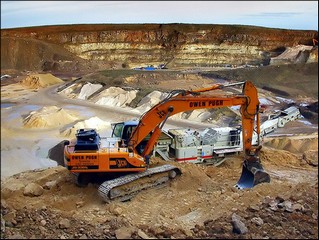
 My sense of justice and my sensitivity to trash came from the same place. These two qualities were not the typical product extracted from that source. The norm was limestone. Behind my childhood home yawned the giant cavity of Steetley quarry, one of the largest aggregate operations in Ontario at the time. Every day Steetley’s activities sent shudders up and down the wooden frame of our house.
We Canadians know well that mining can be lucrative while the digging’s good. When the digging’s done, however, something more than dynamite and dump-trucks is needed to keep aggregating profit. For most of its career Steetley had concentrated on what it took out of the ground. This left a blasted big hole. So when I was in grade six, Steetley switched marketing strategies from pushing outflow to pulling infill.
Their equation was elegantly simple. They had plenty of empty space. Toronto had plenty of extra garbage. Their pairing seemed as perfect as peanut butter and jelly. And if it meant that Steetley would receive truckloads of cash along with the truckloads of trash, well, that just added to the elegance of their mathematics.
But people can be decidedly inelegant, especially when amassed. Greensville—the name of my little four corners—didn’t like the inconsonant sound of a mega-dump within its borders. So it huffed and it puffed and it let out a collective GASP!
G.A.S.P: Greensville Against Serious Pollution. I can’t tell you the name of the wordsmith who wrought this inspired acronym. But as breathless as it sounds, it succeeded in giving our community voice.
We gasped loudly against the effrontery of Steetley. This was our home, not a trash pit. We could bear their daily tremors. But we would not tolerate a tidal deluge of flotsam and jetsam spit up from the vast urban ocean called Toronto.
Our response was not strictly emotive. Reason had its fair share in our campaign. Fractured limestone is notoriously leaky. So too the plastic membranes that line your modern landfill. Despite all the sweet assurances of the company’s engineers that the site would be as tight as a Kevlar canoe, we would not bite. All our wells were at stake. We had nowhere else to draw water.
Moreover, the town of Dundas slept unsuspectingly in the vale below Greensville. If you know water, you know its rude habit of showing up wherever it isn’t invited. We wanted to spare our valley neighbours the indecency of finding leachate in their lovely English gardens.
The gymnasium of my junior high school became a headquarters for organizing. We had town hall meetings and public consultations. We printed flyers, letters to MPP’s, and bold plastic lawn signs, more popular than all their political siblings combined at election time.
One particular fundraiser sticks to my mind like al dente pasta to the wall. It was a spaghetti dinner, $10 a plate. The only wrinkle was that the plate in question was Styrofoam.
Chalk it up to my youthful innocence, but I felt something amiss as we filled garbage bags with the greasy, disposable flatware and ‘china’. By the end of the evening it seemed to me that we had the makings of modest landfill of our own. 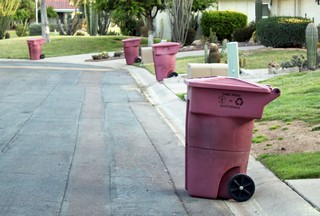
Whatever happened to those plates, I’ll never know. They must have ended up sharing the same eternal resting place with our once proud and defiant lawn signs.
It turned out that, thanks to all our GASPing, Greensville could breathe a deep sigh of relief. To our amazement and delight, Steetley’s proposal got squelched. It couldn’t pass environmental muster. Greensville celebrated, then slipped back into its unthreatened normalcy.
Those early days showed me the potential of civic involvement. They also exposed in me a nerve for inconsistency.
I remember walking down my street a few Tuesday’s after our triumph. Tuesday was garbage day in Greensville. The same old assembly of bags, galvanized tin cans and plastic bins full of junk patiently awaited collection at the end of each drive.