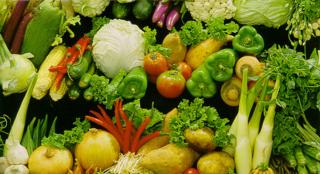
 All of us have a relationship with food. We need to in order to sustain ourselves, let alone to preserve a measure of longevity. Nothing is more basic than that. It is true that once a child is born his first stage of growing starts with water, liquid milk, later with mashed veggies and fruit, and gradually solid food. It is interesting though that this relationship, like any other, develops in different stages of life. Watching a teen ager hammering his burger or a young lady galloping her dessert while mid-age people prefers a more balanced diet and the elderly takes only what their body can take. But age is not the only factor; sick people versus the healthy active ones relate to food in different strides and reasons. However, let me add another factor – inculturation.
This year I was privileged to spend a six months stay in Ghana. One of the first striking signs on entering a new culture was relating to a new cuisine. It was not easy at first, nor did it get any easier with time.
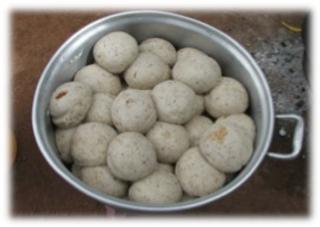 Although I did not starve or was famished by any means, I had to contend with substantial smaller portions especially on protein-based dishes.
It did not take long before I noticed that my body was adjusting to the conditions and the first lesson I had that we can endure and even do well by eating less and get on with life. Although, letting go of basics like fresh milk and cheese for days in a row was one aspect of inculturation which challenged me. But gradually, the maxim holds true: that out of sight, out of mind seems to be true. Given this experience, I ask what has changed in my relationship with food.
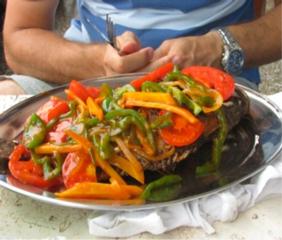 I can think of two things. First, I say my relationship with quantity. There is no doubt in my mind that what we have of food and its variation here in the West is not the same reality in the rest of the world. One single major supermarket (e.g. Safeway, Sobeys, or Superstore) in one neighbourhood of ours contains in quantity and variation more than an entire village in an underdeveloped country. Just have a look at the packaged food we have in the shelves of our food stores. The choices are endless. Now I am more certain of abundance versus austerity as two separate but concurrent realities in the world (our parish so to speak).
Second major shift in me is neither sociological nor cultural but spiritual. I mean gratitude for what is put on our table, here or elsewhere. The awareness of saying grace before a meal has a different flavour in my soul. It is flavour of connectedness between abundance and moderation, variation and austerity, overfed and underfed, and the list of contradictions continue. It is indeed sweet and sour.
I guess food can feed us in a variety of ways, not just our senses and bodies. It can enrich our imagination and mindfulness of distant humanity and places by eating less, and yet remain thankful even for the little things. It is true that as Christians we believe in God of abundance and overflowing gifts but this same God challenges us (Jesus’ parables) to share and be connected with those who have a lot less. This is no small commandment but essential to discover how God labours and could be found when we bring our abundance to other’s austerity, call it a loving sacrifice.
Sacrifice has an inherent aspect of nature. Nature sacrifices its crops, fruits and veggies for our well-being, and since we are part of nature we too sacrifice something of ourselves like fostering an attitude of gratitude to the same effect. Food and gratitude share sacrifice as essential aspect of nature. In this way of sharing the miracle becomes real: Finding God in all things is possible even in conditions of austerity. Make no mistake. Enjoy your meals but share intentionally, mindfully and prayerfully – nothing is less wanting for gratitude to affect us; gratitude has its landmark which is worth discovering.