 The German statesman Otto von Bismark is reputed to have said, “Politics is like sausage making: if you want to enjoy the product, don’t look too closely at the process.” In our society, major group decisions are usually made by some compromise between clashing power interests. The recent Occupy Wall Street movement and the 2012-3 National Hockey League lockout illustrate how the exercise of clashing power drives decisions. Perhaps Adam Smith would call all this “enlightened self-interest.” Well, I certainly see the self-interest but am not so sure about the “enlightened” part!
Individuals usually make major decisions in a similar way: there is a clash of interior motivations and the strongest one wins. Yet there is an alternative mode of decision-making driven not by narrow self-interest and power struggles but rather by humility and concern for others. Ignatian decision-making is rooted in having a clear vision and a firm commitment and by using a principle called the magis.
The word “magis” in Latin means “more” or “greater.” In Ignatian spirituality and in the Ignatian approach to action in the world the magis is always sought. Indeed, in the very motto of the Society of Jesus “ad maiorem Dei gloriam,”(“for the greater glory of God,”) the word “maiorem” is simply the comparative form of “great,” i.e., greater.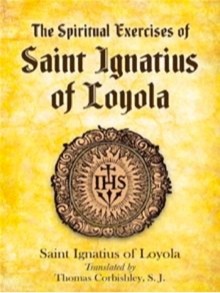
The magis is rooted in St. Ignatius’s Principle and Foundation which itself is the “foundation” for the Spiritual Exercises. The Principle and Foundation is essentially an argument consisting of two premises and two conclusions:
Premises:
1. Our purpose in life is to love and serve God our Creator.
2. Everything and everyone in creation is meant by God to help us in fulfilling life’s purpose.
Conclusions:
1. Therefore, people must embrace anything that leads them to God and must reject and turn away from anything that leads them away from God.
2. Therefore, I must not really desire anything for itself; rather I desire only to love and serve God. I don’t prefer, for example, health over sickness, riches over poverty or a long life over a short one; rather I look for what best leads me to attaining the purpose of life.
 The practical application of the magis lays in the first conclusion. This is perhaps more easily seen in an example and since I have taught in a Jesuit high school for a long time, I’ll draw one from this experience.
One of the constant pressures (in our school at least) is to increase the number of extra-curricular programs. Many factors drive the selection of these programs including school tradition, changing teacher preferences and emerging student interests.
School tradition means that football is inviolable in our school, in large part because so many alumni derived meaning from their experience in the game and continue to be great supporters of the school.
Teacher preferences generally create a strong resistance to abandoning any program once it has become established, not so much because teachers build their own “kingdoms’ (although that does happen from time to time!) but more because when people do those things in which they find meaning they enter into them more fully and do them more willingly. Even retirement doesn’t change this very much since usually younger colleagues have been assigned to “learn the ropes” and then develop similar attachments.
Emergent student interests also can drive the establishment of new programs, though not so much as one might think. It is really the teachers and the administrators who do this. In our school, for several decades people have been wringing their hands over the increased extra-curriculars but only one program has ever been dropped: intramural football—and that was replaced by two new extra-mural teams!
But, of course, more is not always better. The “more” of the magis is not quantitative but qualitative. Ignatius well realized that resources are always limited and therefore must be used to achieve the maximum apostolic value and at root this value is summarized in the two premises of Principle and Foundation: using God’s gifts to love and serve him more fully. As Ignatius wrote, there is no need to discern between clear good and clear evil: one must always choose the good and reject evil and that’s the end of it. The problem is choosing between potential goods.
In the extra-curricular example, there is a complexity of goods interacting. I cannot see anything evil in the entire situation except that, for many, the overall outcome is teachers who feel exhausted and often students who are over-involved to the detriment of a proper balance in life.
But, even exhaustion can be a good thing if one is exhausted in the central service of God’s kingdom. The magis test is about what leads one to God and what leads one away from God. In the particular institutional context of a Jesuit school, the test of the magis must be applied by individuals to themselves and by the institution as a whole to its fundamental mission.
Especially in an institutional context, it is often difficult to apply the magis because our judgments are often clouded by sin and our outlooks often have limited horizons. Teachers’ love for their particular extra-curricular spurs them on but it can degrade to a selfishness which sees other activities as competition. So usually the test of whether or not the particular choice leads the person or the institution to God comes down to the question of how faithfully are we following Christ.
 Our Lord’s life on earth had times of exhilaration, intense community and joy but alo times of dejection, isolation and suffering and even uncertainty. It may seem paradoxical that the Son of God experienced uncertainty but how often did Our Lord need to pray to his Father about his own course of action? Yet (and here is the fundamental point) he never wavered over his intention always to do his Father’s will. For us, then, we model Our Lord when our intention is pure and when we are open to adopting whatever means best realize that intention.
Applying the magis is inextricably connected with Ignatian indifference: an indifference or total openness over the means best to attain our goal but a single-minded intransigence over the goal itself. In Principle and Foundation, Ignatius wrote that the Christian, “should not desire health more than illness, wealth more than poverty, fame more than disgrace, a long life more than a short one .”
What matters is that we adopt the means best suited (the magis) to achieving our goal of knowing, loving and serving God. Doing this is Christian freedom, the freedom St. Augustine of Hippo described when he wrote, “Love God and do what you will.”
In my example of the extra-curriculars in our school, to the extent that the teachers individually and the institution as a whole are able to view their particular activity as merely a means, then they are free enough to discern in confidence. There would be a kind of martyrdom in the teacher who is detached enough from his own particular interest to recognize that the limited resources might better be used elsewhere. The clarity of vision of martyrs comes from their whole-hearted commitment to their God-given mission and from their willingness to be a sacrifice if so doing best promotes that mission and so too for us in less dramatic but none the less still significant circumstances.
One will use the discerning power of the magis well to the degree that one is spiritually free and not subject to what Ignatius called “disordered affections.” In my example of extracurriculars, there is a hierarchy of intentions, at whose apex is the intention to choose God and God alone, cascading down apostolically through the general good of the community, the good of the students, the good of the school institution, the good of the individual student. At every stage of intention comes a risk of vision’s becoming blurred by selfishness (sin) and/or by insufficient horizon; at every stage, then, comes the need for rigorous self-examination and discernment.
The magis becomes a powerful tool for discerning between potential goods once one has made the fundamental choice for God. The general test is how will God be more greatly glorified by this or that action. To carry on with the example of the extracurriculars, suppose the choice is between having a hockey team or not. One might consider factors such as: how available is good hockey from sources other than us? how many students/parents will be affected by such a program? how deeply will they be affected? what are the opportunity costs for this choice (to what other use could resources be put)? how apostolically effective is hockey compared to other potential uses of resources?
 Once a tentative decision is reached, Ignatius calls the decider(s) to rigorous prayer, laying the proposal before God and asking for divine confirmation by consolatory graces such as peace, increased faith, hope love and/or zeal. Then one acts…. and over time one watches carefully for signs that the decision bears the hoped for fruit, for even with the best discernment process imaginable, one could have made a less-than-perfect choice. And the time might come for new discernment and a new decision.
This openness to the Spirit of God, the recognition of our own fragility and utter dependence upon God is our best guarantee that our decisions will be apostolically fruitful. Rather than our decisions’ being driven by the greater appetite or power, they are driven by our seeking the greater glory of God.