 The problem of why God allows suffering never seems to go away. Why are innocent children allowed to suffer? Why deformities in the newly born? And the list goes on.
God did not intend that we should have sufferings when He created the world as a place for humans to live. At the same time, God did not make us robots to live on earth with an automatic response to eating when hungry and propagating the species.
The Church teaches that we were made like God with the ability to love stemming from a free will. We can choose what we want to do. It is because of our free will that the Church teaches that we are made like unto God.
Unfortunately, our first parents failed in their choosing by deciding to do what they wanted to do instead of what God told them to do. The fatal consequences of their disobedience are still affecting the world. Death, sufferings. hardships, calamities and everything else that we don’t want to endure are the consequences. For peace of mind and soul we try to understand and accept these things. They are what we try to understand and try to accept for peace of mind, heart and soul. 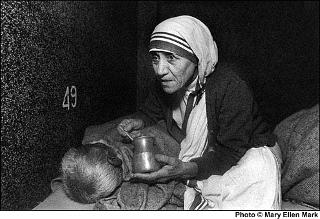
They provide the ingredients of what we might call the spirituality of suffering: how it can serve us in our sojourn in this life as it is now and how it can be spiritualized in order to facilitate our journey towards eternal salvation. Every individual faces the reality of suffering, and questions the reasons for it.
The answers to the questioning are not simple, facile, complete or easy to formulate. We might think that the answer could be that like Adam and Eve we all sin and so, must suffer the consequences. However, Jesus became a human while remaining God but without original sin or personal sin of any kind. Then why did He have to endure excruciating suffering and a most ignominious death on a cross as a despised criminal?
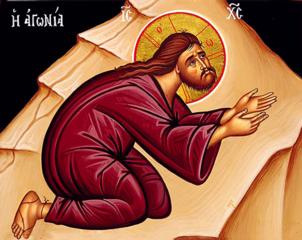 All the suffering that He endured, He freely accepted. Also, He suffered to the limit not because it was needed because as God, anything that Jesus did was of infinite value. The question then arises, why did Jesus do much more than was needed for our redemption?
The Church teaches that Jesus became one of us, except, unlike us, He had no sin. Jesus suffered and died for our salvation. Why? Jesus gave the answer in these words: “
The Father loves me because I lay down my life, to receive it back again. I am laying it down of my own free will…” (John 10:17) “The world must be shown that I love the Father and do exactly as he commands.” (John 14:31)
The Catholic Catechism reveals: “The desire to embrace his Father’s plan of redeeming love inspired Jesus’ whole life, for his redemptive passion was the very reason for his Incarnation.’ (#607)The ultimate answer to all of God’s doings for us is in His love. St. John the Evangelist concluded towards the end of his long life of profound reflection, “”God is love” (1 John 4:8).
In further pursuit of the spirituality of suffering, we should accept any sufferings that enter our lives as loving gifts from God. It helps to reflect on St. Paul’s astounding statement. When he wrote: “In my flesh I complete what is lacking in Christ’s afflictions for the sake of his body, that is, the Church.” (Colossians 1:24).We are involved in the deep mystery of God’s love for us even though we cannot fully understand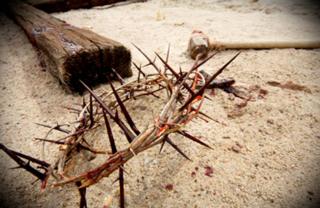
Although Christ redeemed the world by His life, suffering and death and no further act by Christ is needed, there is the mystery of our share in His redemption. We were not needed by God for Christ’s redeeming act to be effective. What Christ did was enough to redeem an infinite number of worlds. But as St. Paul has commented, we are taught that we are needed “to complete what is lacking in Christ’s affliction.” At the same time, we are taught that we are needed “to complete what is lacking in Christ’s affliction.”
But what might be lacking since Christ really redeemed us? That is the mystery. What we are being taught is that it is possible, even necessary, namely, for us to have a share in the redemption of the world. We can participate actively in Christ’s redemption, and not merely be bystanders. We can do our share by contributing our personal sufferings that we freely accept and offer in union with the sufferings of Christ.
Therefore, what is lacking in Christ’s sufferings is our sufferings which only we can offer for this purpose. Our share is the contribution of our personal sufferings accepted and offered in union with the sufferings of Christ. So what is lacking in Christ’s sufferings is our sufferings which only we can offer for this purpose.
God invites us to offer these sufferings by accepting them as a gift from Him. Part of this mystery is why would God want us to contribute to the sufferings of Christ when they were really not needed?
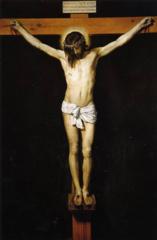 We know that since God always wants what is good for us, then it follows that when God wants us to share in His son’s sufferings, it is for our eternal happiness. In other words, for all eternity I can give thanks to God for having made it possible for me to share in the redemption of the world. I can be a contributor and not just a beneficiary. I can actually participate and not just receive. But it all depends on my freely acceptance of whatever crosses God sends to me.
To help us to appreciate the reality of this offering of our sufferings now and how they can relate to the sufferings of Christ back then, to speak in a human way, we should realize that there is no past or future with God—every action is present to God NOW. Whatever we suffer and offer now becomes part of Christ’s sacrifice then. As far as God is concerned, we are participating in the redemption of the world! Only God can make it so.
Thanks be to God that He has made it possible that through our sufferings we are collaborators with Christ for the redemption of the world. When we do arrive in heaven, we will know that for all eternity we are there by right of having shared in the sufferings of Jesus for the redemption of the world.
Blessed John Paul II referred to this as The Gospel of Suffering, and he explained that this “Gospel” is ongoing, being written each day with additions being entered continually now, as in the past and will continue into the future, as long as there is suffering that is offered to God.
When we see someone we love suffering the agony of pain from terminal cancer, we might remind them of this offering of their suffering to God. Often we hear of those who accept their suffering with peace of mind and heart, and by the graces received from their loving Father, they can endure all that is required of them until God calls them home.