Of all the stories in the Gospels relating the appearances of the resurrected Christ to His disciples, surely that of the two disciples meeting him on the way to Emmaus may well grip us the most,
At heart it is a very human, simple story, packed with pathos and sadness, but too, overflowing with Eucharistic celebration and spiritual joy through faith in the risen Christ. As this story reveals to us, such joy is part of faith, but faith can also be revealed to us in sadness and troubling moments.
We can easily place ourselves in the scene to become intimately part of it.
Observe what was going on.
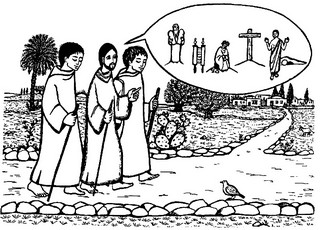 As the story unfolds, two of Christ’s disciples were walking to Emmaus. In fact, though, they were escaping, fleeing Jerusalem. As with so many of their contemporaries, they had come to believe in a political Messiah. Yet all they ended up with was some prophet who got himself arrested and executed. Or so they thought. They held onto false understandings of who Jesus was: “We were hoping that he would be the one to set Israel free.”
In their eyes, his mission had entirely failed. Instead of the political hero they wanted and hoped for, they got a crucified, humiliated man whose followers fled at top speed when things got too hot. Christ’s brutal end in Jerusalem made no sense to these two and to how they understood the Scriptures about Messiah’s appearance. They did not believe the testimony of the women who had heard the angels declaring that Jesus was alive. They could not grasp it. For them it was just anecdotal stuff.
So they left.
Feeling badly disillusioned in their expectations of him and greatly let down, they headed to Emmaus, away from the Cross and from the witnesses to the resurrection. Despite their disillusionment, however, despite their disappointment, their lack of faith, indeed even in spite of themselves, as they walked along they encountered the risen Jesus on the way. Or more correctly, he found them.
A stranger in appearance, a fellow traveller who had caught up with them, they fell to conversing with him. Unwittingly they were drawn to him, undoubtedly attracted by his personality, his knowledge, his friendly disposition, his demeanour, his willingness to engage them.
In that encounter, lay Christ’s opening, his opportunity to reach them, to offer them new hope, new joy, faith.
In what is surely among the more touching scenes in all of the Gospels, a truly spiritual moment indeed, yet a truly human one too, by means of his explanations of the Scriptures concerning Messiah, they opened themselves to faith in the resurrected Christ. “When they drew near to the village to which they were going, he made as if to go on; but they pressed him to stay with them. ‘It is nearly evening’, they said, ‘and the day is almost over’. So he went in with them.”
Yet they had still to recognize him fully. Only “at the breaking of the bread” did they truly understand, “and their eyes were opened, and they recognized him”.
At that moment, though, he had already disappeared from them.
Now they were left with their “eyes” of faith to carry them onwards with a new sense of direction and a spiritual task in the world.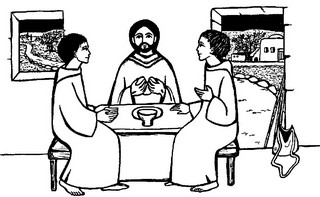
So, with hearts re-awakened–“Did not our hearts burn within us as he talked to us on the way?”–their faith in the resurrected Christ confirmed and their determination to witness to him enlivened, they immediately headed back along the same way to recount to the assembled faithful in Jerusalem the Good News of their having met the risen Christ.
They had come full circle, their journey to Emmaus and back now completed. They had found their crucified, risen Saviour.
All that happened on the way.