 The original and current vision of the Apostleship of Prayer is focused on the value of helping with the salvation of souls by offering one’s day (prayers, works, joys and sufferings) as an unending prayer.
This vision appealed to the restless Jesuit seminarians who were anxious to be involved in active apostolic work in the foreign missions. They realized that they could help the work of the missionaries in foreign lands by the spiritual offering of their daily work. Simply put, one’s daily life, by offering it to God, could be transformed into spiritual value for the salvation of souls.
By examining Jesus’ life, we learn how He spent thirty years at Nazareth doing ordinary things even though He had become man with the tremendous task of saving the world. Thus, one’s ordinary daily life can be transformed into apostolic prayer if it is offered to God as a prayer.
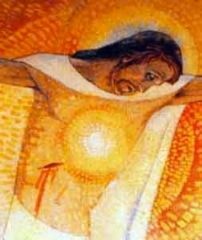 A new vision might be fashioned based on assisting people to qualify for eternity; to be with Jesus and Mary who at present are “at the right hand of God the Father “ with their glorified bodies.
The purpose of proposing this new vision is an attempt to give a more imaginative depth to the concept of what living in heaven could mean; a secular world dwells on immediate gratification. Members of the Apostleship of Prayer collaborate with Christ in the salvation of souls. They focus on eternal life for everyone.
The concept of this new vision is based on Pope Benedict XVI’s explanation of the meaning of Christ ascending into heaven and sitting at the right hand of the Father. (His lengthy explanation is at the end of his second volume: Jesus of Nazareth). This concept is very ancient in the Church and is included in both the Apostles’ and Nicene Creeds. 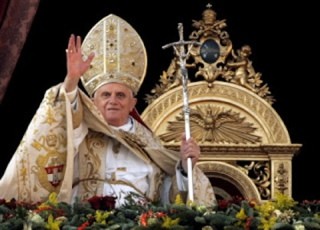
The new Catholic Catechism explains the meaning of ‘seated at the right hand of the Father’ by quoting St. John Damascene: “By ‘the Father’s right hand’ we understand the glory and honour of divinity, where he who exists as Son of God before all ages, indeed as God, of one being with the Father, is seated bodily after he became incarnate and his flesh was glorified.” (#663)
Pope Benedict XVI dwells at length on the phenomenon of the resurrected body of Jesus and its meaning. He makes a significant conclusion by stating “that we could regard the Resurrection as something akin to a radical ‘evolutionary leap’, in which a new dimension of life emerges, a new dimension of human existence. Indeed, matter itself is remolded into a new type of reality.” In other words, Jesus now exists in a new kind of world that can support the human body of Jesus and Mary’s body, too. The truth that Mary is with her Son is defined in the dogma of the Assumption.
The Pope then elaborates. “The man, Jesus, complete with His body, now belongs totally to the sphere of the divine and eternal. Even if man by his nature is created for immortality, it is only now that the place exists in which his immortal soul can find its ‘space’, its ‘bodiliness’, in which immortality takes its meaning as communion with God and with the whole of reconciled mankind.” It seems clear that the Pope is writing about a new kind of world that God has created already. We might call it a new garden that is even more wonderful than the original Garden of Eden. It is our belief that this new garden is for all the saved when their souls are reunited with their material bodies at the resurrection of the dead on the Last Day.
What kind of a material world will it be? We know that all humans who will be in it with their material bodies will be perfectly happy–no pain, no suffering, no anxiety, no deformities, no conflicts, none of the afflictions of this present world that can make living miserable. At the same time, in this new world of the resurrected body, all the saved will know each other as well as God and all His angels who, like God, are pure spirits.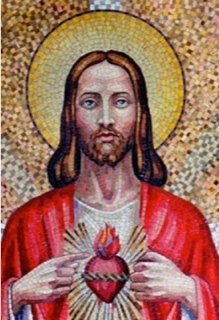
We think that it is healthy spiritually to reflect on the next life with eager anticipation of what God has prepared for those who prove their love for Him in this life. It can help us to remain steadfast in our faith with confidence that trying to live a good life now is indeed worthwhile.
The Pope has given us a more appealing picture of the afterlife than what the secular media presents of the deceased sitting on a cloud and listening to an angel choir. For the Pope, heaven is a new creation, a new garden, which God has created already where Jesus and His Mother Mary live with their human bodies. Unlike the original Garden of Eden which was for all humans, this new garden in heaven is for those who qualify for it while on this earth and are faithful members of God’s family. Their bodies will be resurrected and glorified on the Last Day.
We are limited in our imagination to our earthly experiences. Thus, the proposed future life might be compared to an ideal summer day when we are able to sit or play in the fresh air surrounded by beautiful scenery that makes one’s heart expand in gratitude for this present glorious creation of God. We cannot envision the new world that the Apostle John referred to when he wrote “Then I saw a new heaven and a new earth.”(Rev. 21:1)
Perhaps we can describe the role of members of the Apostleship of Prayer today in this way: to collaborate with Jesus to “make all things new.” (Rev. 21:5) Thus, our prayers are offered to Jesus as our contribution to His work of salvation so as “to fill up in our bodies what is lacking in the sufferings of Christ for the sake of His body, that is, the church.” (Col. 1:24). Pope John Paul II developed this teaching at length in his encyclical, ‘Salvifici Doloris’, on the Christian meaning of human suffering. (1984).
Not only our sufferings but also our prayers, works and joys are offered to Jesus in our daily offering prayer. The objective is to share in the saving work of Jesus—not because we are needed but because Jesus has made it possible for us to share this work with Him. For all eternity we will have the satisfaction of knowing that we have done our part and were not just spectators; thanks be to God for inviting us to participate.
We might summarize this thought by saying that our role as apostles of prayer is to collaborate with Jesus in helping others to join Jesus and Mary “at the right hand of God” for all eternity. 
To express this more imaginative idea or vision of the purpose of the Apostleship of Prayer to pray for the salvation of souls we propose: The Apostleship of Prayer is a spiritual union of those who respond to the invitation of Jesus to share with Him in the salvation of the world by offering their daily lives as He did for 30 years at Nazareth.
Their prayers, works, joys and sufferings become spiritual sacrifices acceptable to God (1 Peter 2:5). In this way they help people to be His friends now and for eternity. On the last day the bodies of God’s friends will be resurrected and glorified as Jesus is now at the right hand of the Father along with His Mother Mary in her assumed body. They will enjoy eternal peace and joy in union with God and with all His angels and friends.